
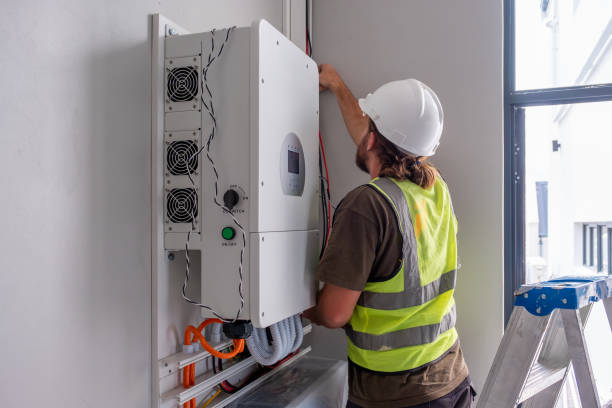
Modern residential solar power systems rely heavily on the type of inverter installed. As we expand our solar power capacity across Perth suburbs, understanding how grid-forming and grid-following inverters operate is essential for achieving system stability, blackout protection, and reliable battery performance. Homeowners assessing upgrades or new installations increasingly need clarity on these two inverter styles and the value they bring to long-term energy resilience.
Understanding the Role of Grid-Following Inverters
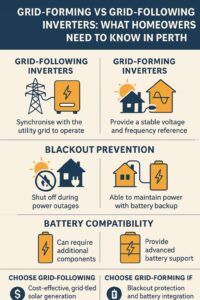
Grid-following inverters remain the most common choice in residential systems. These inverters synchronise with the existing utility grid, converting DC output from rooftop panels into AC electricity that matches the grid’s voltage and frequency. Because they rely on the network to operate, they shut down during outages for safety compliance.
For households that primarily use their solar installation to offset daytime energy consumption, grid-following units provide a straightforward and cost-effective solution. They support good day-to-day efficiency but lack the capability to independently stabilise local power when the grid is unavailable.
How Grid-Forming Inverters Strengthen Energy Stability
Grid-forming inverters operate differently by generating their own stable voltage and frequency reference. This ability makes them suitable for off-grid, hybrid, and solar-battery systems where stable power supply must be maintained regardless of grid conditions.
Homes equipped with grid-forming technology can maintain power during outages when paired with batteries. These inverters also support improved load management by controlling how various appliances draw power. As power stability becomes a higher priority in Perth households, this capability positions grid-forming inverters as an important component in resilient system design.
Blackout Prevention: Why the Difference Matters
The key distinction between both inverter types becomes clearer during a power outage. Grid-following inverters switch off immediately when the grid is down. Grid-forming inverters, however, can keep the home energised by forming a microgrid, provided there is sufficient battery storage available.
For homeowners looking to maintain essential loads—such as refrigeration, communications equipment, or small appliances—grid-forming inverters enable continued operation and limit the disruptions caused by localised or widespread blackouts.
Battery Compatibility in Modern Solar Systems
Battery integration is now a central consideration for families wanting better control over their energy independence. Grid-following inverters can work with batteries, but often require additional components such as hybrid inverters or AC-coupled battery inverters.
Grid-forming inverters usually offer more advanced battery support because they directly control voltage and frequency. This results in smoother charging cycles, improved battery reliability, and more efficient discharge patterns. The technology also enhances system longevity, reducing stress on battery banks during high-demand events.
What This Means for Homeowners in Perth
Choosing between the two inverter types depends on the homeowner’s goals:
- If the priority is cost-effective solar generation tied to the grid, a grid-following inverter remains a suitable option.
- If the priority is blackout protection, battery integration, and long-term system resilience, grid-forming technology offers a stronger foundation.
With rising interest in solar power Perth solutions that support greater energy independence, selecting the right inverter becomes a critical early decision. Grid-forming systems are increasingly adopted for homes considering batteries now or in the future, while grid-following units remain common for simple grid-connected setups.
Conclusion
Grid-forming and grid-following inverters both play important roles in residential solar design, but their functions differ significantly. Grid-following inverters synchronise with the utility network for efficient daily performance, whereas grid-forming inverters create independent stability, support advanced battery operation, and provide essential power during outages. As homeowners explore modern renewable technologies and investigate the benefits of Solar inverters Perth, understanding these distinctions ensures better decision-making, improved system reliability, and long-term energy value.
